

Home
About Us
Company Profile
Qualification patent
Products
Anesthesia Consumables
Medical Beauty Consumables
Acupuncture and Moxibustion Supplies
Intermediary Consumables
News
Company News
Industry Information
Dealer Column
Sales Strategy
Dealer Registration
Download Information
Contact Us
Contact Information
Online message
中文版
English
Common Misconceptions About Using Anesthesia Puncture Kits
In the medical field, anesthesia puncture kits are becoming increasingly common, especially during surgeries and other procedures requiring anesthesia. However, misconceptions about these kits are widespread, leaving many healthcare professionals and patients confused. Today, we’ll debunk some of the most common myths to help you better understand how to use anesthesia puncture kits. Myth 1: Anesthesia puncture kits can be used arbitrarily Many people assume that as long as an anesthesia puncture kit is available, it can be used without restriction. This view is clearly mistaken. In fact, such kits are specialized medical devices that must be administered by trained healthcare professionals. Just as a chef cannot simply use a pressure cooker at will, operating an anesthesia puncture kit requires skill and experience. When using these kits, practitioners must assess each patient’s specific condition and select the appropriate anesthetic technique. Blind or improper use may not only yield suboptimal results but also lead to serious adverse effects. Therefore, choosing a reputable manufacturer of anesthesia puncture kits is crucial, as they can provide high‑quality, compliant products along with technical support. Myth 2: All anesthesia puncture kits are the same Many people believe that there is little difference between kits produced by different manufacturers. In reality, this is a very common misconception. An…
06
2026
/
05
Recommendations for Anesthesia Puncture Kits by Surgical Procedure Type
In modern medicine, the use of anesthesia puncture kits has become increasingly widespread. They not only enhance surgical safety but also greatly simplify the work of anesthesiologists. However, with a wide variety of anesthesia puncture kits available on the market, selecting the right product can be a challenging task. Today, we’ll discuss how to recommend appropriate anesthesia puncture kits based on different types of surgeries, as well as key considerations when choosing a manufacturer. I. What Is an Anesthesia Puncture Kit? An anesthesia puncture kit is a specialized toolset designed for anesthesia procedures. It typically includes various types of needles, catheters, disinfectant supplies, and other auxiliary instruments. The purpose of these kits is to improve the efficiency and safety of anesthesia administration, and different surgical procedures have distinct requirements for such kits. II. Selecting an Anesthesia Puncture Kit Based on Surgical Type 1. General Surgery For general surgical procedures—such as appendectomy or cholecystectomy—we usually opt for a kit that contains standard anesthesia needles and catheters. These kits generally come equipped with a supply of anesthetic agents and essential disinfectant materials to ensure a smooth surgical process. 2. Orthopedic Surgery Orthopedic surgeries often demand a high degree of precision in anesthesia administration.
26
04
From R&D to Production: The Manufacturing Process of Anesthesia Puncture Kits
From Research and Development to Production: The Manufacturing Process of Anesthesia Puncture Kits In the medical industry, anesthesia puncture kits play a crucial role. They help physicians administer anesthesia smoothly during surgical procedures, ensuring patient safety. However, manufacturing these kits is far from straightforward; it involves multiple stages, including research and development, design, and production. Today, we’ll take an in-depth look at the manufacturing process of anesthesia puncture kits and explore the stories behind them. R&D Phase: From Concept to Prototype It all begins with an idea. Manufacturers of anesthesia puncture kits typically identify gaps in existing products through market research, feedback from clinicians, and technical analysis. Imagine you’re a physician—what kind of tool would you want to make your job safer and more convenient? Such needs serve as the driving force for the R&D team. During this phase, engineers collaborate closely with medical experts to create initial prototypes. This isn’t just theoretical; designers must also consider material selection, product safety, and user experience—much like baking a new cake, where the recipe requires repeated testing to achieve the optimal balance. Material Selection: Ensuring Safety and Efficiency Once the prototype is finalized, the next step is choosing the right materials. This stage is critical, as the materials used in anesthesia puncture kits…
16
Exploring the Role of Interventional Therapy Surgical Packs in Anesthesiology
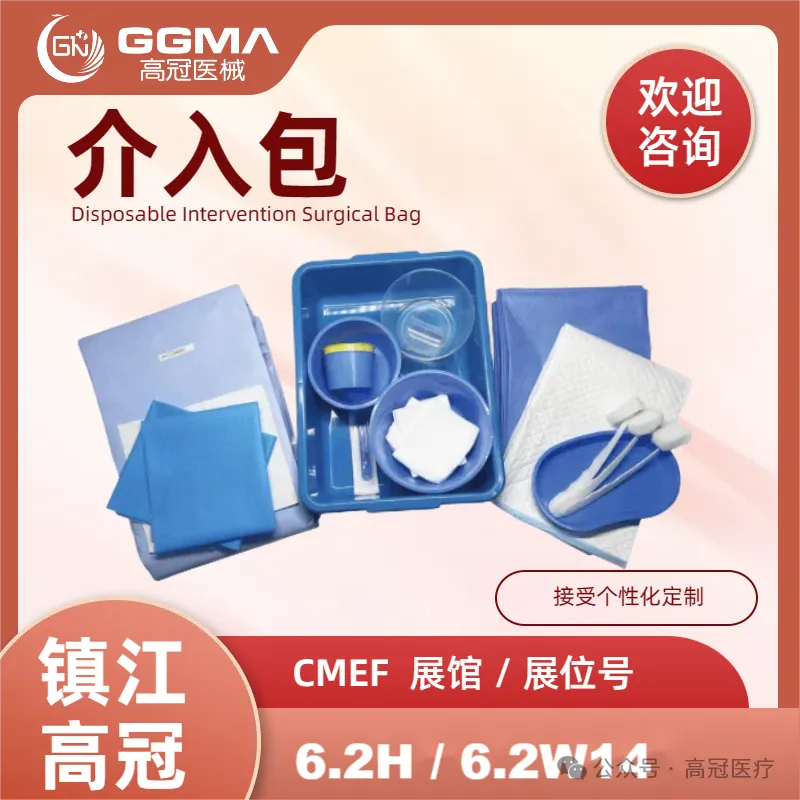
Amid the rapid advances in medicine, anesthetic techniques continue to evolve, and among these innovations, the “interventional procedure kit” has emerged as a cutting‑edge tool that is steadily becoming an integral part of the field of anesthesia. So, what exactly is an interventional procedure kit, and why does it play such a pivotal role in anesthesia? What is an interventional procedure kit? Simply put, it is like a small toolbox filled with all the instruments and materials required to perform specific medical procedures. This type of kit enables physicians to carry out interventions—whether during anesthesia or other therapeutic procedures—with speed and efficiency. Think of it as a chef preparing ingredients in the kitchen: every knife, utensil, and seasoning is neatly arranged, allowing for seamless execution. Composition of an interventional procedure kit So, what typically comprises an interventional procedure kit? It usually includes catheters, needles, tourniquets, anesthetic agents, and various monitoring devices. Each component is carefully selected to ensure that, during the procedure, clinicians can respond promptly to any unexpected situations. You might wonder: are these tools really that critical? Absolutely. In the context of anesthesia, time is of the essence; even the slightest delay can place the patient at risk. And…
Applications are now open for the Dual Postdoctoral Program, with a focus on Zhejiang Province and Hangzhou, scheduled for April 25–26.
Reservations are now open for the dual-postdoctoral program.
27
03
Detailed Explanation of the Components of an Interventional Therapy Surgical Kit
In modern medicine, the interventional procedure kit has emerged as an essential medical tool, gradually becoming an indispensable part of physicians’ daily practice. So, what exactly comprises an interventional procedure kit? Today, we’ll take a closer look. What is an interventional procedure kit? First, let’s clarify what an “interventional procedure kit” actually is. Simply put, it is a collection of instruments and materials specifically designed for performing interventional procedures. This combination of devices and consumables helps physicians carry out various interventional surgeries more effectively, improving surgical success rates and reducing the risk of complications. Basic Components of an Interventional Procedure Kit Next, let’s examine what this mysterious kit contains. Generally speaking, the basic components of an interventional procedure kit include the following: 1. Medical Instruments Medical instruments form the core of the interventional procedure kit. They encompass, but are not limited to, the following: - Catheters: Used to guide other instruments or deliver medications within the body, serving as the foundation of interventional therapy. - Balloons: Employed to dilate blood vessels or other luminal structures, helping restore normal blood flow. - Stents: Designed to keep blood vessels patent and prevent restenosis. - Needles: Used for puncturing the skin or other tissues…